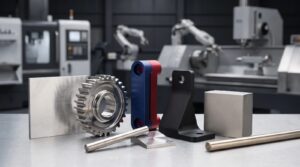
If you’re wondering what exactly a precision engineering company is and how the CNC machining process works, you’re at the right place. In this blog, we will provide you with all the necessary information to help you understand the use of precision machining.
CNC precision engineering is the core part of modern manufacturing that assists in the production of complex components with high tolerances. These parts are then further utilised in multiple industries, such as aerospace, automotive, medical and defence.
What is CNC Precision Engineering?
CNC precision engineering refers to the process of manufacturing highly complex and accurate components using the Computer Numerical Control (CNC) machining. These machines are built to operate through specific instructions, creating intricate parts from different materials such as metals, plastic and others. There is minimal human intervention in this process.
Here’s what to expect when utilising CNC machining:
- High consistency
- Unmatched precision
- Error-free production
How Precision Engineering Supports Manufacturers
Computer Numerical Control (CNC) is a method that automates the production and machining of tools using computer programming. This is combined with precision engineering that designs and manufactures components with tight tolerances. Together, they assist manufacturers in getting consistent, accurate and reliable parts.
How Does CNC Precision Engineering Work?
Precision engineering services enable manufacturers to transform digital designs and rough ideas into real-time, physical components. Let’s take a look at the steps involved:
1. Designing With CAD Software
The initial step is digital design. Specialists use Computer-Aided Design (CAD) software to produce 2D and 3D models of the specific part.
With CAD, you can get:
- Design simulations
- Revisions, changes and alterations in the design
- An in-depth draft for machining
2. Converting Design into Code (CAM)
The next step is to convert the CAD file into a code that the machines can read and understand. This is done using the Computer-Aided Manufacturing (CAM) software. This code contains:
- Tool path
- Feed rates
- Cutting depths
- Rotation speed of spindles
3. CNC Machine Set-Up
Before the main precision engineering process of machining begins, the specialists begin to set up the CNC machine. This involves checking for:
- The right cutting tools
- Mandatory materials (metal, plastic or any other)
- Workholding devices like fixtures and clamps for secure manufacturing
4. Machining the Component
After the machine is programmed and completely set up, it begins the machining process. The most widely-known and commonly used processes include:
- CNC Turning
- CNC Milling
- CNC Drilling
- CNC Grinding
5. Finishing & Product Assembly
Towards the end, components undergo other minor processes that provide them with some final finishes. These may include:
- Polishing
- Heat Treatment
- Andonising or coating
- Fastening, assembly or wiring
6. Quality Assurance and Inspection
Each component goes through rigorous testing and inspection procedures before delivery. These are often carried out using:
- Coordinate Measuring Machines (CMM)
- Accurately scaled and adjusted measuring tools, including micrometres and callipers.
With complete assistance, from the initial stages of designing and creating a prototype to large-scale batch production, our high-precision machining services in London contribute to the manufacturing of accurate and standard-quality components.
The Key to Innovation in Modern Manufacturing
With advanced precision machining and the latest CNC technology, you can get premium components. Harnam Engineering combines innovation, excellence and accuracy to meet your demands and specifications. Here’s how CNC precision engineering helps in modern manufacturing:
1. High Accuracy
The latest technology works with micron-level tolerances and is best suited for components requiring exact dimensions.
2. Consistency
In large production runs, precision machining assists in producing components with consistency while minimising human error and increasing reliability.
3. Speed and Efficiency
With automated machining and updated CNC technology, lead times are reduced. Manufacturers can benefit from faster production runs while maintaining the quality.
4. Diversity
The machines can work with multiple materials, including:
- Aluminium
- Stainless Steel
- Brass
- Copper
- Mild Steel
- Engineering Plastics
5. Cost-Effectiveness
The use of precision engineering services reduces the need for manual labour. The automated process also leads to little to no waste. Both these factors make the procedure cost-effective.
Precision Engineering | Industrial Automation
The use of CNC technology and precision machining is widespread and applicable in multiple industries. These are a few of the major industries that utilise high precision machining services in London:
- Aerospace
- Automative
- Medical
- Defence
- Electronics
How To Choose The Right CNC Precision Engineering Partner
Opting for the right precision engineering company can make a significant difference. When looking for high-quality, complex components, here’s what you should consider:
- Latest CNC machining and technology
- Experienced engineers and machinists with extensive knowledge
- Check for ISO standards and certifications like ISO 9001:2015
- Quality control, inspection and testing facilities
- Handling both prototypes and high-volume production runs
If you’re on the lookout for the ultimate precision engineering company that has all the CNC machining solutions, turn to Harnam Engineering. Every part we deliver reflects accuracy, reliability, and consistency.