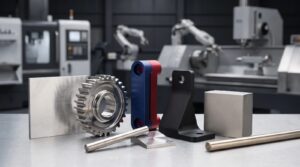
What really is DFM? Simply put, it is an approach in product development meant to focus on optimising the design process to boost manufacturing efficiency. Design manufacturing principles aim to create designs that are functional and aesthetically pleasing while also being feasible for mass production. It is a strategic methodology that takes into consideration manufacturing constraints, material properties and production capabilities during the design phase instead of after completion.
The goal of DFM principles is to create designs that meet all functional requirements and are easy for manufacturers to make. It is based on the idea that the more complicated a design is, the harder it is to manufacture with precision and the more it costs. There are a few core ideas behind design for manufacturing that
Design For Manufacturability Guidelines & Principles
Certain DFM principles and guidelines have been set to optimise product design. Although these principles vary from industry to industry, their purpose remains the same. Here are the main ones:
Simplicity
The design should be kept as simple as possible while meeting functional requirements. Simplicity can also be maintained by reducing the number of components. This makes the assembly process less complicated and lowers manufacturing costs. Additionally, it reduces the likelihood of defects and errors for precision engineering services.
Standardisation
Standardisation is the usage of commonly available components and materials in the design. This is to capitalise on industry standards that already exist and resources that are readily available. It helps manufacturers in streamlining the production process by reducing the need for custom components and minimising lead time.
Materials
Selected material should be accessible, affordable, and compatible with the manufacturing processes. Material choices can have a big impact on both cost and manufacturability.
Tolerance
Essentially, the goal is to manage the tolerances in the design so that parts can fit together correctly. Not to use finely tuned tolerances that lead to costly manufacturing hurdles.
Environment
The design for manufacturing process aims to adapt the product to the context in which it will be used. Taking every operating condition into consideration. Every product component must be able to operate in these conditions.
Review and Iterate
Being able to conduct regular design reviews within cross-functional teams is the goal. The team detects possible manufacturing issues, analyses costs, examines quality and recommends design modifications. Keep iterating until the goals are achieved.
Prototype and Test
Prototyping and testing the design to verify function and performance is of importance. A precision engineering company should adhere to all industry standards for all products and components.
Process
The objective of DFM in manufacturing is to determine the process that best enables companies to balance costs, production volume, and product factors. Automation and automated processes can increase efficiency and reduce labour costs for product assembly services.
Benefits of DFM
DFM has long-term benefits. For a company, DFM has a direct correlation with its bottomline and competitiveness. Below are some of the advantages of DFM:
- Cost Efficiency: Design for manufacturability assists in recognising and eliminating design elements that drive up manufacturing costs. Optimising design to allow for efficient production, materials use, and assembly helps companies reduce production costs.
- Enhanced Quality: The goal of DFM is to eliminate design features that could result in defects during manufacturing. DFM enhances product quality and reliability by simplifying design and minimizing complex assembly steps.
- Improved Time to Market: Improved and more data-driven DFM processes can result in reduced production lead time. This allows companies to bring their product to market more quickly, which can be critical in competitive industries.
- Improved Product Performance: DFM can result in improved product performance by optimising design elements, material choices, and production methods. This leads to products that fulfill or go beyond customer requirements.
- Less scrap and waste: one of the most consistent attributes seen in DFM is reduced manufacturing errors and defects. That minimizes loss during the stamping process. It also saves money and is more sustainable in the manufacturing process.
- Improved Production Efficiency: Manufacturing design enables companies to improve production efficiency. The faster cycle times, reduced labour manhours and improved use of manufacturing equipment are part of it.
- What merits the Advantage: DFM principles allow organisations to have a competitive advantage in the market. This enables them to provide products at lower cost, higher quality and faster delivery times. It brings in additional customers and increases market share.
Conclusion
Design for Manufacturing (DFM) allows the product to be well designed while also being practical and cheaper than alternatives with quality that is sure to be embraced in a highly competitive market. Designing with manufacturing in mind from the onset will not only reduce cost, time to market and improve quality but also lead to less waste.
DFM simplifies this by narrowing the gap between design and production. Applying these principles leads to increased efficiency, better product performance, and a clear competitive edge for the companies doing so.
Frequently Asked Questions (FAQs)
Q1. What does DFM mean in manufacturing?
DFM stands for Design for Manufacturing. It is a development approach that ensures products are designed with production in mind from the start. It focuses on making designs practical, cost-effective, and easy to manufacture.
Q2. What are the 5 principles of design for manufacturing?
The five core DFM principles typically include simplicity, standardisation, material selection, tolerance optimisation and process optimisation. Together, these ensure products are functional while remaining efficient and affordable to produce.
Q3. How do design for manufacturing principles improve efficiency?
DFM improves efficiency by simplifying product designs and reducing unnecessary components. This streamlines assembly, reduces errors, and shortens production cycles. As a result, manufacturers can improve workflow and make better use of time and resources.
Q4. How does DFM help reduce manufacturing costs?
DFM reduces costs by eliminating complex design elements that increase production time and waste. It promotes the use of standard components and practical tolerances to avoid expensive manufacturing challenges. Addressing these factors early prevents costly redesigns and delays.
Q5. Why are DFM principles important in precision engineering?
In precision engineering, accuracy and consistency are critical to product performance. DFM ensures designs use appropriate tolerances, materials, and processes to minimise defects. This leads to higher quality outputs, reduced scrap, and more reliable results.